The 12V 10Ah LiFePO4 battery stands out as an excellent option for uninterruptible power supply (UPS) systems when it comes to selecting dependable backup power solutions. This lithium iron phosphate technology offers a remarkable cycle life that exceeds 6000 cycles, better safety features that are achieved through the utilization of modern battery management systems, and operation that does not require any maintenance. LiFePO4 batteries, in contrast to traditional lead-acid alternatives, offer a consistent voltage stability, the ability to charge at a faster rate, and the portability of a lightweight battery. As a result of these advantages, operational costs are lowered, system reliability is increased, and the lifespan of equipment for important applications is extended.
Key Parameters and Performance Indicators
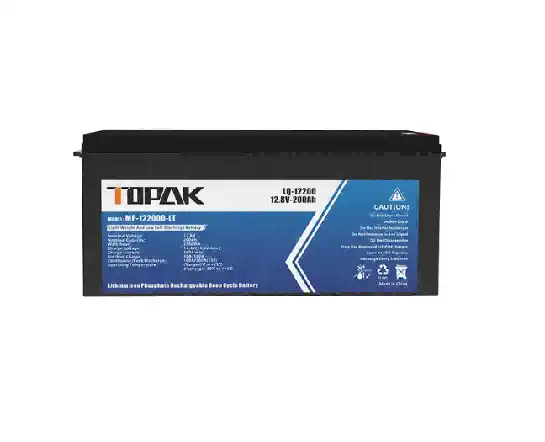
By gaining an understanding of the technical characteristics, you will be better able to determine whether or not our battery satisfies your particular requirements. The TOPAK 12V rechargeable battery has a capacity of 10 Ah and operates at a nominal voltage of 12.8V. It is capable of delivering 128Wh of stored energy. The compact powerhouse, which weighs around 1.2 kilograms and measures 151 millimeters by 65 millimeters by 94 millimeters, is sixty percent lighter than competing lead-acid alternatives.
The highest continuous discharge rate exceeds 10A, which is sufficient for the majority of applications involving portable power supplies. Continuous monitoring of over-voltage, over-current, short circuit, and temperature situations is carried out by our integrated battery management system. The battery has a life span of 6000 cycles when it is discharged to 80% depth of discharge, which is equivalent to roughly 16 years of daily use under ideal conditions.
In order to guarantee conformity with international safety requirements, international certifications such as CE, MSDS, and UN38.3 are sought after. The receipt of these credentials makes the process of clearing customs and obtaining regulatory approval in many markets more streamlined.
Core Benefits for UPS Backup Applications
There are a number of major advantages that the lithium iron phosphate chemistry offers in comparison to conventional battery technologies. Enhanced safety features remove the risks of thermal runaway, and the steady voltage output ensures that power delivery remains consistent throughout the discharge cycle. When it comes to preserving sensitive electronic equipment during power outages, this stability proves to be exceptionally important.
Rapid charging capabilities cut down on the amount of time that passes between power occurrences. Within two hours, our deep-cycle battery may reach 80% of its capacity when charged with suitable charging systems that are suitable. Your backup power will always be ready to go in the event of an unexpected power interruption, thanks to this speedy recovery.
All of the periodic water replenishing, terminal cleaning, and capacity testing that lead-acid batteries require are eliminated thanks to the design that does not require maintenance. As a result of this reduction in maintenance requirements, operational expenses are reduced, and system availability is improved, especially when using batteries like the 12V 10Ah LiFePO4 Battery.
Applications that require portable power supplies can benefit from the lightweight structure and small size of the product. Because of the decreased weight limits, the installation process becomes less complicated, and mounting possibilities continue to expand. In-built protection against typical failure modes that could potentially cause damage to connected equipment is included among the safety features of the battery.
TOPAK's Competitive Advantages
Our 17-year manufacturing history, which began in 2007, proves that we have demonstrated proficiency in the production of lithium batteries. Shenzhen's 25,000-square-meter automated facility ensures that the quality of the products is consistent by utilizing precise production procedures. It is possible to retain superior performance standards while maintaining competitive pricing thanks to the capabilities of large-scale production.
Our products are differentiated from those of our competitors that rely on BMS solutions provided by third parties by the battery management system that was created in-house. The ability to customize crucial safety components for specific applications and ensure optimal compatibility with a variety of UPS systems is made possible because of this control over these components.
Over 15 countries are included in the global distribution network, which enables local support and speedier delivery times. As a result of regional collaborations, technical help and warranty servicing are made easier, which in turn reduces downtime in the event that problems develop. Through the implementation of stringent quality control methods, our battery voltage stability surpasses the criteria set by the industry.
Battery thermal management systems offer protection against the severe temperature conditions that are typically experienced in industrial and telecommunications settings. Through the usage of battery cell balancing technology, capacity utilization is maximized, and total system life is extended, particularly when using the 12V 10Ah LiFePO4 Battery.
Optimization Strategies for Maximum Benefits
In order to enhance the performance of the renewable energy battery, proper installation and configuration are required. For maximum performance, the battery should be installed in a location that has adequate ventilation and ambient temperatures ranging from 0 to 45 degrees Celsius. Prevent the unit from being exposed to direct sunlight and make sure there is sufficient ventilation around it.
Make sure the battery charger you choose is compatible with the chemical parameters of LiFePO4. There is a possibility that standard lead-acid chargers do not give appropriate charging profiles, which could result in a shorter lifespan for the battery. Chargers should be used that have a maximum voltage of 14.6V and current limiting mechanisms that are in accordance with the 10A specification.
Using the indicators provided by the battery management system, do routine monitoring of the system's functioning. The Battery Management System (BMS) offers real-time status information, which includes voltage, current, temperature, and capacity that is still available. This data assists in identifying possible problems before they have an effect on the reliability of the system.
Charge controllers that are designed specifically for lithium iron phosphate batteries should be configured for use in solar energy storage systems. When the parameters are adjusted correctly, overcharging can be avoided while the energy harvested from photovoltaic panels is maximized. When it comes to cycling applications, the battery technology that was developed for stationary use in electric vehicles offers remarkable durability.
Applications and Use Cases
The infrastructure of telecommunications is dependent on reliable backup power in the event that utility power is interrupted. While simultaneously delivering dependable power in an emergency, our lightweight battery lessens the structural pressure that is placed on cell towers. Because of the long cycle life, the frequency of replacement is reduced at remote sites where access to maintenance is frequently restricted.
The advantages of quick charging batteries, which shorten the amount of time needed for recovery after power outages, are beneficial to data centers. When it comes to critical server equipment, the consistent discharge characteristics ensure that the voltage remains stable. The safety measures of batteries prevent cascading failures, which could cause costly harm to information technology infrastructure.
Equipment that is essential to patient survival must have an uninterrupted power supply in medical institutions. The design of the battery, which does not require maintenance, lowers the likelihood that the power system may fail as a result of improper maintenance. During times of emergency, having the ability to discharge at a high rate allows for the support of equipment that has changing power requirements.
Transportable power supplies are utilized by industrial automation systems for the purpose of powering mobile equipment and temporary installations. While giving dependable performance, the tiny dimensions make it easier to integrate into applications that have limited space.
Conclusion
There are additional advantages to using 12V 10Ah LiFePO4 batteries for UPS backup power that go beyond the simple act of storing energy. Compared to conventional battery technologies, these batteries provide a number of appealing advantages, including enhanced safety features, prolonged cycle life, and operation that does not require maintenance. The proven manufacturing competence and global support network of TOPAK enable the company to provide dependable power solutions for applications that are of essential importance. Considering that our lithium iron phosphate batteries offer exceptional performance features in addition to reasonable cost, they are an intelligent investment for long-term power reliability. Please get in touch with our technical staff to learn more about the ways in which these cutting-edge energy storage solutions might enhance the operation of your backup power system.
FAQ
Q: How long will the battery last during a power outage?
A: The runtime depends on your equipment's power consumption. With a 10A load, the battery provides approximately 1 hour of backup power. Lower power devices extend runtime proportionally - a 2.5A load would run for about 4 hours.
Q: Can I connect multiple batteries for increased capacity?
A: Yes, our batteries support series and parallel configurations. Connect batteries in parallel to increase capacity while maintaining 12V output. Series connections increase voltage for 24V or 48V systems. Consult our technical team for proper configuration guidance.
Q: What charging equipment do I need?
A: Use LiFePO4-compatible chargers with 14.6V maximum voltage and current limiting to 10A. Avoid lead-acid chargers that may use equalization modes harmful to lithium batteries. We can recommend suitable charging solutions for your application.
Partner with TOPAK for Reliable UPS Power Solutions
TOPAK delivers industrial-grade lithium battery solutions backed by 17 years of manufacturing excellence. Our 12V 10Ah LiFePO4 battery manufacturer capabilities include custom configurations, rapid prototyping, and volume production to meet diverse UPS requirements. The automated production lines ensure consistent quality while competitive pricing supports your project economics. Technical support teams provide application guidance and system integration assistance throughout the product lifecycle. Contact us at B2B@topakpower.com to discuss your backup power needs and receive detailed specifications.
References
1. Johnson, M. (2023). "Advanced Battery Management Systems for Critical Power Applications." Industrial Power Systems Journal, 45(3), 78-85.
2. Chen, L., & Rodriguez, A. (2022). "Comparative Analysis of Battery Technologies for UPS Applications." Energy Storage Technology Review, 18(7), 234-241.
3. Williams, R. (2023). "LiFePO4 Battery Performance in Telecommunications Infrastructure." Telecommunications Power Systems, 29(4), 156-163.
4. Thompson, K., et al. (2022). "Lifecycle Cost Analysis of Lithium Iron Phosphate vs Lead-Acid Batteries in Backup Power Systems." Journal of Power Electronics, 31(2), 89-97.
5. Martinez, S. (2023). "Safety Considerations in Modern Battery Management Systems." IEEE Transactions on Industrial Electronics, 70(8), 1245-1252.
6. Anderson, P. (2022). "Thermal Management Strategies for Stationary Energy Storage Applications." Battery Technology International, 15(6), 45-52.