Robust Rack Battery Backup for Business Continuity & Safety
Businesses can lose tens of thousands of dollars every minute when the power goes out. If the power goes out unexpectedly, a reliable battery backup rack mount system is your first line of defense to keep important processes running smoothly. Today's battery backup rack mount options work with current systems and offer flexible power safety for data centers, telephony facilities, and industrial equipment.
Understanding Battery Backup Rack Mount Systems
Battery backup rack-mount systems are an important part of protecting modern business equipment. Advanced battery technology and smart tracking systems work together in these high-tech power options to keep the power on even when the power goes out.
Core Components and Architecture
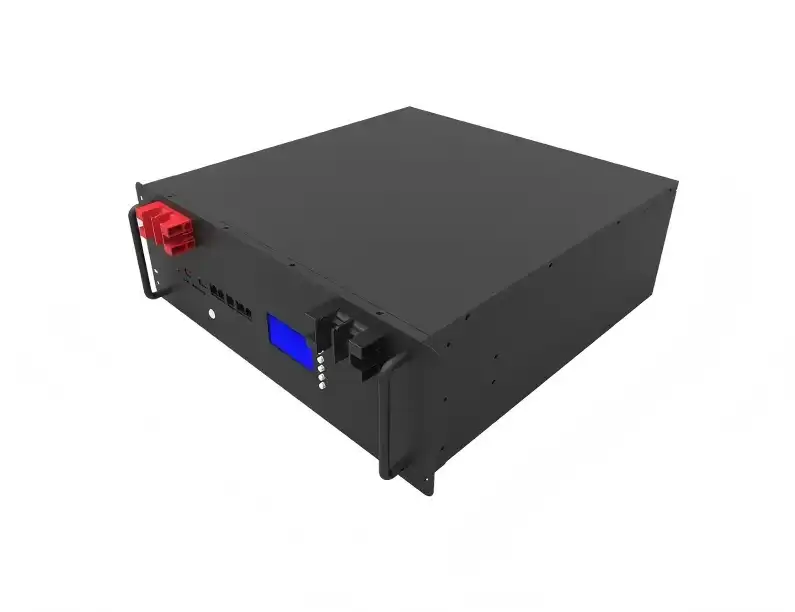
The physical design of a rack-mounted backup system is what makes it work. The battery management system (BMS) is like the brain of the system; it constantly checks the power, temperature, and charge processes. This smart control stops overcharging, increases the battery's life, and keeps it working at its best in a variety of environments. Lithium iron phosphate (LiFePO4) batteries have changed the backup power business in a big way. Compared to older lead-acid batteries, these new cells have a higher energy density, can be charged faster, and have much longer operating lifetimes. The TP-48100R type is a good example of this change; it has a strong 51.2V 100Ah setup and a 6000 cycle life at 80% depth of discharge.
Rack Mount vs Tower UPS Solutions
Whether you choose a rack mount or tower setup depends on where you work and how much room you have. Rack-mounted systems work well in server rooms and data centers where there isn't much room for horizontal equipment but a lot of room for vertical racks. Their standard form factor makes it easier to handle cables and make good use of the room. Tower systems work well in smaller offices or spread-out places that don't have specific rack hardware. Rack-mounted systems, on the other hand, can be expanded more easily. The TP-48100R system shows how up to 15 units can work together in parallel. This allows for flexible capacity growth without having to completely rebuild the infrastructure.
System Integration and Compatibility
Modern backup systems that are placed on racks can talk to each other using a number of different protocols, such as RS485 and CAN bus connections. This connection makes it easy to connect to online tracking tools and build control systems that are already in place. With the optional Bluetooth and 4G units, tracking can be done over more than just wired networks. This means that status reports can be sent in real time from almost anywhere. Advanced units like the TP-48100R have a small size (430 x 442 x 177 mm) that improves power density while still being compatible with normal racks. At about 48 kg, these devices are the perfect mix between storing a lot of energy and being easy to set up.
Selecting the Best Battery Backup Rack Mount for Your Business Needs
Procurement professionals must navigate numerous technical specifications and vendor claims when selecting battery backup rack mount solutions. Understanding key performance metrics enables informed decision-making that aligns with long-term operational objectives.
Capacity Planning and Scalability Assessment
To find the right backup capacity, you need to carefully look at the key load needs and the total length you want. Figure out how much power your important equipment uses when it's not in use, then add in losses from inefficiency and the need for future growth. Modern lithium systems can discharge 100A continuously, which can handle large loads while keeping the voltage stable. Scalability factors include more than just the original capacity needs. As a business's needs change, modular systems that can run in parallel offer cost-effective ways to grow. Being able to add battery packs in small amounts keeps you from spending too much on capacity that you won't use, while also making sure that your infrastructure is protected enough to handle growing needs.
Performance Comparison Framework
Leading manufacturers offer varying approaches to backup power solutions, each with distinct advantages for specific applications. Here are the core factors distinguishing premium solutions from basic alternatives:
• Cycle Life Performance: Advanced lithium systems deliver 6000+ cycles compared to 500-1000 cycles from traditional lead-acid batteries, reducing long-term replacement costs
• Charging Efficiency: Modern systems achieve 95%+ efficiency during charging cycles, minimizing energy waste and heat generation
• Temperature Tolerance: Industrial-grade units operate reliably across -10°C to 55°C temperature ranges without performance degradation
• Communication Capabilities: Integrated monitoring systems provide real-time diagnostics, predictive maintenance alerts, and remote management functionality
These advantages translate into measurably lower total cost of ownership through reduced maintenance requirements and extended operational lifecycles.
Battery Chemistry Impact on Operations
Choosing between lithium and lead-acid technologies has a big impact on the costs of operations and upkeep. When you use a lithium system, you don't have to water it regularly, and it works well in a wider range of temperatures. The lack of acid spill risks makes installation compliance easier and lowers the amount of environmental care that needs to be done. Lead-acid systems are cheaper to buy at first, but they need regular upkeep like checking the battery level, cleaning the terminals, and trying the capacity every so often. Even though they cost more up front, lithium devices often provide better value over a normal 10-year operating time.
Installation, Maintenance, and Troubleshooting of Battery Backup Rack Mounts
Successful deployment of rack-mounted backup systems requires careful attention to environmental preparation, electrical configuration, and safety protocol adherence. Proper installation practices ensure optimal performance and regulatory compliance throughout the system lifecycle.
Environmental Preparation and Safety Protocols
Rack-mounted systems need to be kept in controlled settings that have enough air flow and temperature control. Temperatures in the environment should stay within the ranges recommended by the battery maker to get the best performance and longest life. The IEC62619, UN38.3, and MSDS certifications make sure that the shipping and installation meet foreign safety standards. Checking for enough supply capacity, proper grounding systems, and suitable circuit safety are all parts of electrical planning. Before turning on new systems, professional installation teams should make sure that the voltages are compatible, that the phases are aligned correctly, and that there is neutral grounding.
Maintenance Best Practices
Compared to other types of batteries, lithium battery systems don't need as much regular upkeep. Every month, you should look at the ends to make sure they are clean, the connections are tight, and the breathing is good. Every three months, the system is tested to make sure that the backup works properly under controlled conditions that don't affect usual operations. The built-in BMS keeps an eye on the volts, temperatures, and charging state of the cells all the time. Reviewing system logs regularly finds possible problems before they affect the availability of operations. Automatic balance functions keep cells working at their best without any help from a person.
Common Troubleshooting Scenarios
Fortunately, modern battery backup rack mount systems have advanced monitoring tools that make fixing easier. Certain error numbers let workers know what steps to take to fix the problem when an alarm goes off. Communication timeouts are usually caused by problems with the way the network is set up, not by hardware problems. Temperature-related alarms may mean that there isn't enough airflow or that the temperature is too high. Most of the time, capacity warnings appear slowly over time, giving maintenance planners time to plan. To keep the guarantee valid, complicated system problems should only be fixed with professional expert help.
Enhancing Business Continuity and Safety with Battery Backup Rack Mounts
Putting money into reliable backup power systems pays off in the form of lower downtime costs and better business reliability. Implementations in real life across a range of businesses show that good power security methods really do work.
Case Study Analysis and ROI Metrics
Rack-mounted lithium backup systems were used to protect important base station equipment in a recent telecommunications infrastructure launch. The 6000-cycle lifespan cut down on the number of times the product had to be replaced from every 3–4 years to 10 years or more. This saved a lot of money because maintenance visits and replacement cycles were cut down. After implementing rack-mounted backup, data center operations report 99.99% more uptime. Lithium systems don't have voltage drops because they respond quickly. Voltage drops can damage data or sensitive equipment. These changes in dependability directly lead to happy customers and steady income.
Safety Standards and Risk Mitigation
International safety standards make sure that electricity systems have good risk management. The UN38.3 certification confirms safe ways to move and handle things, and the IEC62619 certification covers specific needs for fixed energy storage uses. When there are a lot of racks together, fire control becomes very important. Compared to other battery technologies, lithium iron phosphate chemistry is naturally stable at high temperatures. Using the right space and ventilation during construction lowers the risk of fire even more while keeping performance at its best.
Future-Proofing Integration Strategies
Modern backup systems are ready for changing energy management needs because they can connect to the smart grid. Connecting IoT devices to the internet lets them take part in demand response programs and peak saving programs that lower the costs of running the business. Predictive repair plans that reduce the number of unexpected breakdowns are supported by remote tracking. When building management systems are connected to energy systems, it's possible to keep an eye on how energy is generated, stored, and used. This all-around method maximizes efficiency while still meeting important power security goals.
Procurement and Partnership Opportunities
To successfully buy backup power options, you need to work with providers who offer full support for the entire duration of the product. Leading providers are different from basic sellers because they have technical knowledge, the ability to customize, and global service networks.
Supplier Selection Criteria
When looking for makers to work with on battery backup rack mount systems, look for ones that have a history of success and a lot of experience in the field. TOPAK New Energy Technology Co., Ltd., which was founded in 2007, has the steadiness and knowledge that are needed for important power uses. Our manufacturing plant in Shenzhen, which costs 25,000 won, has the output capacity needed to keep the supply chain reliable. Companies that can create their own BMS have clear benefits over those that use parts from other companies. Our tech team is in charge of all safety features, improving speed, and making sure that all of our systems work together. This vertical merging lets customization happen quickly and makes sure that the quality of all product variations is the same.
Global Distribution and Support Networks
For international businesses to run, they need providers who can offer regional help in more than one area. TOPAK is present in more than 15 countries through regional partners, which makes sure that technical help is quick and that processes run smoothly. Large-scale automatic production lines keep quality uniform and allow for the quick supply of urgent needs, including battery backup rack mount. For specialized uses that need specific power, capacity, or form factor changes, the ability to customize becomes necessary. Our engineering team works closely with clients to create custom solutions, including battery backup rack mount configurations, that work with their current systems and meet their specific operating needs.
Partnership Benefits and Service Integration
Having long-term relationships with dependable providers makes buying things easier and makes sure that performance standards are always met. Full technical support, which includes customizing the BMS and integrating other systems, lowers the risks of operation and speeds up project timelines. Bulk purchasing can save you money on large-scale operations and keep the supply chain running smoothly. Professional installation services and assistance after the sale round out the value offer, providing full solutions that reduce the need for internal resources.
Conclusion
Robust battery backup rack mount systems are an important part of modern business processes that need a steady power source. Moving from old-fashioned lead-acid batteries to more modern lithium batteries gives better performance, longer life, and less upkeep. The best safety for important technology and long-term business stability goals can be achieved by choosing the right system, having it professionally installed, and working with providers with a lot of experience.
FAQ
How do I determine the right capacity for my backup power needs?
Calculate your critical load power consumption during normal operations and multiply by the desired runtime hours. Add 20-30% margin for efficiency losses and future expansion. The 100A continuous discharge capability of modern systems like the TP-48100R supports substantial loads while maintaining voltage stability throughout the discharge cycle.
What maintenance is required for lithium rack-mount batteries?
Lithium systems require minimal maintenance compared to lead-acid alternatives. Monthly visual inspections verify clean terminals and secure connections. Quarterly system tests validate backup operation under controlled conditions. The integrated BMS continuously monitors performance parameters and provides predictive maintenance alerts.
Can I expand my system capacity after initial installation?
Modern modular systems support parallel operation for scalable capacity expansion. The TP-48100R system accommodates up to 15 parallel units, enabling incremental capacity additions as requirements evolve. Professional evaluation ensures proper system balance and optimal performance across all connected modules.
Partner with TOPAK for Reliable Battery Backup Solutions
TOPAK's proven expertise in industrial-grade lithium battery solutions positions us as your ideal battery backup rack mount supplier. Our TP-48100R system delivers a 6000-cycle lifespan and 100A continuous discharge capability, supported by comprehensive IEC62619, UN38.3, and MSDS certifications. Established in 2007 with global distribution across 15+ countries, we provide customized energy storage solutions backed by in-house BMS technology and large-scale automated production. Contact our team at B2B@topakpower.com to discuss your specific requirements and discover how our rack-mounted backup systems enhance business continuity while reducing total ownership costs.
References
1. International Energy Agency. "Energy Storage Systems: Critical Infrastructure Protection Standards." Energy Technology Perspectives 2024.
2. Institute of Electrical and Electronics Engineers. "Recommended Practice for Stationary Battery Installation and Safety Requirements." IEEE Standard 1188-2022.
3. National Fire Protection Association. "Standard for Electrical Safety in the Workplace: Battery Room Design and Ventilation." NFPA 70E Guidelines 2024.
4. American Society of Heating, Refrigerating and Air-Conditioning Engineers. "Thermal Management for Data Center Battery Backup Systems." ASHRAE Technical Committee Report 2024.
5. Battery Council International. "Industrial Battery Performance Standards and Testing Protocols." Technical Bulletin Series Volume 47, 2024.
6. Uptime Institute. "Data Center Power and Cooling Infrastructure Reliability Study." Annual Global Survey Report 2024.

Tell us your battery specifications or application

TOPAK
Popular Blogs
-
 Product updateSuccessful caseProducts and services
Experience Consistent Power with a Low Speed EV LiFePO4 Battery
-
 Product updateSuccessful caseProducts and services
How Do Base Station Batteries Support Renewable Integration?
-
 Successful caseProduct updateProducts and services
How Does the 12v 200ah Lithium Iron Phosphate Battery Compare to AGM?