Maintenance-Free Lithium 150Ah Battery for Energy Independence
Maintenance-free lithium 150Ah batteries are a completely new way to store energy that gives industrial uses unmatched dependability and efficiency. These high-tech power solutions use cutting-edge lithium iron phosphate (LiFePO4) technology and complex battery management systems. They do away with the need for regular maintenance that comes with standard lead-acid batteries. With a 1920Wh energy capacity and a cycle life of more than 6000 cycles, these batteries give many businesses long-term energy independence while lowering costs and harm to the environment.
Understanding Maintenance-Free Lithium 150Ah Batteries
Core Specifications and Capacity Significance
The lithium 150Ah capacity rating tells you how many ampere-hours a battery can provide in normal situations. This makes it perfect for heavy-duty industrial uses. Our 12.8V 150Ah LiFePO4 battery gives us 1920Wh of usable energy, which is a lot of power for long activities. This capacity lets important devices keep getting power while keeping the voltage stable during the discharge cycle.
When figuring out usage needs, the 150Ah capacity becomes clear how important it is. Manufacturers of industrial equipment can count on a reliable power supply, and integrators of energy storage systems can take advantage of modular scalability. The battery's standard voltage of 12.8V makes it compatible with 12V systems, which makes integration easy in a wide range of situations.
Working Principles and Essential Components
LiFePO4 chemistry is what these maintenance-free batteries are based on. They use lithium iron phosphate cathodes, which are very safe and stable at high temperatures. During charge and discharge cycles, lithium ions move between the cathode and the anode as part of the electrochemical process. This makes the energy transfer stable without the memory effects or sulfation problems that are common in regular batteries.
The smart control center is the built-in Battery Management System (BMS), which constantly checks cell volts, temperatures, and current flow. We have developed a special BMS system that protects against over-voltage, over-current, short circuits, and temperature changes. This advanced monitoring makes sure that the machine works at its best and stops damage from happening when working conditions change.
Maintenance-Free Nature Compared to Traditional Alternatives
Regular care for traditional lead-acid batteries includes checking the electrolyte level, cleaning the terminals, and charging them to the same level. These upkeep needs cause problems with operations and raise the total cost of ownership. Maintenance-free lithium batteries get rid of these worries because they are sealed and have improved chemistry that stays stable without any help.
Since there are no liquid electrolytes, there are no spills or corrosion problems that come with regular batteries. Because LiFePO4 works well across a wide range of temperatures, temperature correction is no longer needed. This elimination of maintenance means that industrial facilities will have lower labor costs, less downtime, and better working efficiency.
Advantages of Maintenance-Free Lithium 150Ah Batteries over Traditional Alternatives
Superior Energy Density and Weight Reduction
Because they have higher energy densities, lithium batteries are better than standard lead-acid batteries. Our 12.8V 150Ah battery is about 16 kg and works just as well as lead-acid batteries that are 45 to 50 kg heavier. This lighter weight makes it easier to install, lowers the structural needs, and makes it easier to move around for movable uses.
When you work in an industry setting where real estate is expensive, space efficiency is very important. With small measurements of 328 x 172 x 215 mm, it can store a lot of energy while taking up very little space. Less weight on the towers is good for telecommunications companies, and marine applications get more room for extra equipment or cargo.
Enhanced Safety Features and International Compliance
Security remains vital in mechanical applications, and our coordinated security frameworks surpass industry measures. The built-in BMS gives multi-layer assurance counting over-voltage anticipation, over-current confinement, brief circuit location, and temperature observing. These highlights work naturally without client intervention, guaranteeing nonstop assurance amid ordinary and irregular working conditions.
International certifications counting UN38.3, MSDS, and CE, illustrate compliance with worldwide security measures. These certifications encourage worldwide shipping and administrative endorsement, supporting worldwide dispersion systems. Media transmission and ICT companies especially esteem these certifications for gear sending over numerous purviews.
Environmental Benefits and Economic Analysis
Natural focal points amplify past diminished upkeep necessities to encompass the whole item lifecycle. LiFePO4 chemistry contains no poisonous or overwhelming metals, empowering more secure transfer and reusing forms. The expanded cycle life of 6000 cycles at 80% profundity of release diminishes substitution frequency, minimizing natural impact through diminished fabricating and transportation requirements.
Economic investigation uncovers essentially lower cost of possession compared to lead-acid choices. Whereas an introductory venture may be higher, the combination of expanded life expectancy, decreased support costs, and moved forward proficiency makes considerable long-term investment funds. Vitality capacity framework trustworthiness report 40-60% taken a toll diminishments over 10-year operational periods when figuring in substitution costs and upkeep labor.
Selecting the Right Maintenance-Free Lithium 150Ah Battery for Your Business
Technical Specifications for Diverse Applications
Solar energy solution companies need batteries that can handle deep discharge cycles and still hold their charge. Our 150A highest continuous discharge capability works with high-power inverters and can start motors. The wide working temperature range makes sure that the device works reliably in harsh environments and outdoor installations.
Manufacturers of industrial equipment can use the battery directly in place of current 12V lead-acid systems because it is designed to be a drop-in replacement. The stable nominal voltage of 12.8V ensures a steady power supply without the voltage sag problems that happen with old lead-acid batteries. This voltage stability makes sure that technology works well and extends the life of parts.
When OEM and ODM companies work together, they need to be able to customize things beyond what is normal. For voltage changes, changes to capacity, and customizations to BMS features, our tech team offers full support. Custom battery pack configurations can be made to fit specific size needs and communication methods for integrating the system.
Brand Comparison and Chemistry Considerations
Different market leaders use different methods for lithium battery technology, and each has its own benefits for certain uses. While Renogy works on solar integration with specialized charge controllers, Battleborn is more focused on marine and RV applications with tough construction. Lion Energy offers modular systems for setups that can be expanded, and ExpertPower provides low-cost options for uses that need to keep costs down.
LiFePO4 chemistry strikes the best mix between safety, performance, and durability for most business uses. Other lithium 150Ah chemistries might have a higher energy density, but they would lose safety limits and cycle life. Because iron phosphate cathodes are thermally stable, they can be used without active cooling devices. This makes things simpler and more reliable.
The choice between 100Ah, 150Ah, and 200Ah capacities is based on the amount of energy needed and the space available. The 150Ah design is very flexible and can be used in a wide range of situations. Its weight and size are also easy to handle. For stationary setups, bigger capacities may make sense, while smaller ones work best for mobile uses where weight is important.
Best Practices for Using and Maintaining Lithium 150Ah Batteries
Optimal Charging Protocols and Storage Conditions
Using the right charging methods will make your batteries last longer and keep them working at their best. The suggested charging voltage of 14.6V with current limiting stops the battery from overcharging and makes sure it is fully charged. Because LiFePO4 is steady, temperature compensation is not needed. This makes choosing a charger easier and makes the system simpler.
The way batteries are stored has a big effect on their health and performance over time. For long amounts of time, the best storage temperature is between 15°C and 25°C, and the state of charge should be between 50 and 60%. By keeping the partial charge and avoiding extreme temperatures, you can keep the calendar's capacity from dropping and make it last longer than the stated specs.
Charging current choice strikes a mix between charging speed and battery life. Our BMS can handle charging currents of up to 150A and keep an eye on the voltages and temperatures of the cells. Lower charging currents increase cycle life, while higher currents speed up turnaround for tasks that need to be done quickly.
Troubleshooting Common Technical Issues
BMS blame codes give symptomatic data for fast issue recognition, proof, and determination. Over-voltage security ordinarily indicates a charger breakdown or incorrect voltage settings. Under-voltage cutoff recommends immediate release or stack awkwardness requiring prompt consideration to avoid permanent damage.
Temperature-related shutdowns may show insufficient ventilation or excessive encompassing temperatures. The coordinates warm assurance avoids harm but requires natural evaluation to address root causes. Appropriate wind stream and temperature avoid repeating happy occasions and guarantee persistent operation.
Communication blunders between BMS and outside frameworks frequently result from wiring issues or convention jumbles. Our specialized back group gives comprehensive investigation guides and inaccessible symptomatic capabilities to minimize downtime and reestablish typical operation rapidly.
Industrial Safety Guidelines and Installation Requirements
Proficient establishment guarantees ideal execution and compliance with security directions. Legitimate torque details for terminal associations avoid arcing and resistance warming that seem compromise framework keenness. Wire measuring calculations must account for nonstop and crest current requirements to anticipate voltage drops and overheating.
Ventilation prerequisites vary significantly from lead-acid establishments due to the absence of hydrogen gas generation. Be that as it may, satisfactory wind current anticipates warm buildup amid high-current operations and expands component lifecycles. Establishment areas ought to dodge coordinate daylight and give get to for review and benefit activities.
Electrical segregation and establishing strategies to secure staff and hardware from electrical risks. Ground-blade assurance becomes especially critical in versatile establishments where vibration and development may compromise separator keenness. Normal review plans ought to incorporate visual checks for physical harm and association astuteness.
Company Introduction and Product Service Information
Since its start in 2007, TOPAK New Energy Technology Co., Ltd. has become one of the leading companies making industrial-grade lithium batteries. Our 25,000-square-foot factory in Dalang TOPAK Industrial Park shows our dedication to large-scale automated production, which guarantees stable quality and fast delivery for customers all over the world. Our name has been built on creative engineering and dependable performance in a wide range of industrial settings.
Our wide range of products is based on lithium battery systems that don't need to be maintained and are made to be energy independent and run perfectly. The 12.8V 150Ah LiFePO4 battery is a great example of our engineering skills. It combines advanced chemistry with BMS technology that was created completely by our own team. This vertical integration gives full control over safety features, improving speed, and making sure systems work together.
Professional services include more than just making products; they also include developing and supporting whole solutions. Our engineering team can create products specifically for your needs, and our global distribution network, which includes more than 15 countries, makes sure that you can get help quickly and in your own language. Through the right implementation methods, technical consulting services help customers get the most out of system integration and return on investment.
Our automated production lines have quality assurance methods that make sure they strictly follow international standards and customer requirements. Our in-house BMS development skills let us quickly change things and add new features based on how the market is changing. Long-term relationships with OEMs, system integrators, and distributors around the world are made possible by this technical know-how.
Conclusion
Free lithium 150Ah batteries that store electricity are a revolutionary way for many industry uses to become energy independent. Advanced LiFePO4 chemistry, built-in BMS protection, and no need for regular upkeep make these products very valuable for companies that make equipment, integrate energy storage, and offer solutions. These batteries have a 6000-cycle life, a 1920Wh energy capacity, and a lot of safety features that make them stable and lower the total cost of ownership. TOPAK's manufacturing skills and ability to ship products all over the world make sure that customers get high-quality products that come with full technical help and excellent customer service.
FAQ
What factors influence charging time for 150Ah lithium batteries?
Charging time depends primarily on charger specifications and battery state of health. A 30A charger requires approximately 5-6 hours for complete charging from 20% state of charge, while 50A chargers reduce this to 3-4 hours. Temperature conditions and battery age may extend charging times slightly, but the integrated BMS optimizes charging profiles automatically for maximum efficiency and safety.
How do lithium 150Ah batteries compare cost-effectively against lead-acid alternatives?
While initial investment costs are higher, lithium batteries provide superior long-term value through extended lifecycles and reduced maintenance requirements. Total cost of ownership analysis typically shows 40-60% savings over 10-year operational periods when factoring in replacement costs, maintenance labor, and energy efficiency improvements. The 6000-cycle lifespan significantly exceeds lead-acid alternatives lasting 500-800 cycles.
Can these batteries perform reliably in extreme temperature conditions?
Our 12.8V 150Ah LiFePO4 batteries operate effectively across temperature ranges from -20°C to +60°C with built-in thermal protection. The BMS monitors cell temperatures continuously and adjusts performance parameters to maintain safety margins. While capacity may be slightly reduced at temperature extremes, the batteries continue providing reliable power delivery without permanent damage or safety concerns.
Partner with TOPAK for Premium Lithium 150Ah Solutions
TOPAK stands ready to support your energy independence goals through premium lithium 150ah battery solutions backed by over 17 years of manufacturing excellence. Our automated production capabilities and in-house BMS technology ensure consistent quality and rapid delivery for your industrial applications. Whether you need standard configurations or fully customized battery packs, our engineering team provides comprehensive support from design through deployment. Connect with our lithium 150ah manufacturer specialists at B2B@topakpower.com to discuss your specific requirements and discover how our proven solutions can enhance your operational efficiency while reducing total cost of ownership.
References
1. International Energy Agency. "Grid-Scale Battery Storage: Frequently Asked Questions." Energy Technology Policy Division, 2022.
2. Battery University. "Lithium Iron Phosphate: The Most Promising Li-ion Battery." Advanced Battery Research Institute, 2023.
3. Institute of Electrical and Electronics Engineers. "Battery Management Systems for Large Lithium-Ion Battery Packs." IEEE Standards Association, 2022.
4. National Renewable Energy Laboratory. "Cost and Performance Database for Energy Storage Technologies." U.S. Department of Energy, 2023.
5. International Electrotechnical Commission. "Secondary Lithium Cells and Batteries for Portable Applications." IEC Technical Committee, 2022.
6. ournal of Power Sources. "Life Cycle Assessment of Lithium Iron Phosphate Batteries for Industrial Applications." Elsevier Energy Research Division, 2023.

Tell us your battery specifications or application
TOPAK
Popular Blogs
-
 Product updateSuccessful caseProducts and services
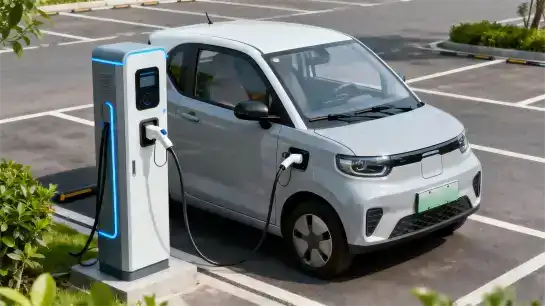
Experience Consistent Power with a Low Speed EV LiFePO4 Battery
-
 Product updateSuccessful caseProducts and services
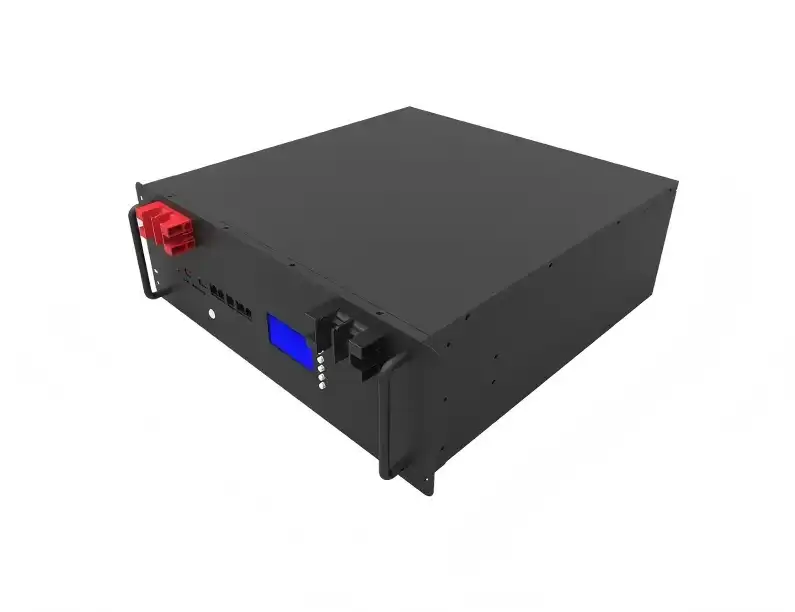
How Do Base Station Batteries Support Renewable Integration?
-
 Successful caseProduct updateProducts and services
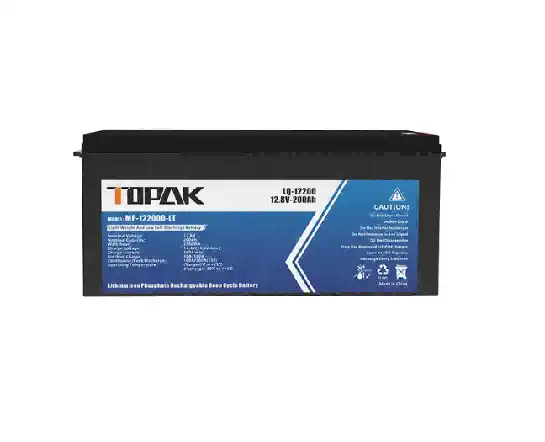
How Does the 12v 200ah Lithium Iron Phosphate Battery Compare to AGM?