Is the 12v 200ah Lithium Iron Phosphate Battery Suitable for Data Centers?
The 12V 200AH lithium iron phosphate battery is perfect for data centers because it is more reliable, has a longer cycle life, and has more safety features than standard lead-acid batteries. These batteries work great in mission-critical settings where keeping things running smoothly is very important. They have advanced LiFePO4 chemistry that lets them last for more than 6,000 cycles at 80% depth of discharge, built-in Battery Management Systems (BMS), and a steady power supply. Because they are small, don't get damaged by heat, and can be charged quickly, they work great for backup power systems, UPS systems, and incorporating green energy into modern data center infrastructure.
Understanding the 12V 200AH Lithium Iron Phosphate Battery and Its Role in Data Centers
The lithium iron phosphate (LiFePO4) technology is a big step forward in ways to store energy, especially for demanding uses like data centers. Because of the chemicals they contain, these batteries have a fixed crystal structure that prevents thermal runaway. This makes them safer than other lithium chemistries. In a data center, where fire safety and temperature control are very important, this steadiness is very important.
Technical Specifications and Performance Metrics
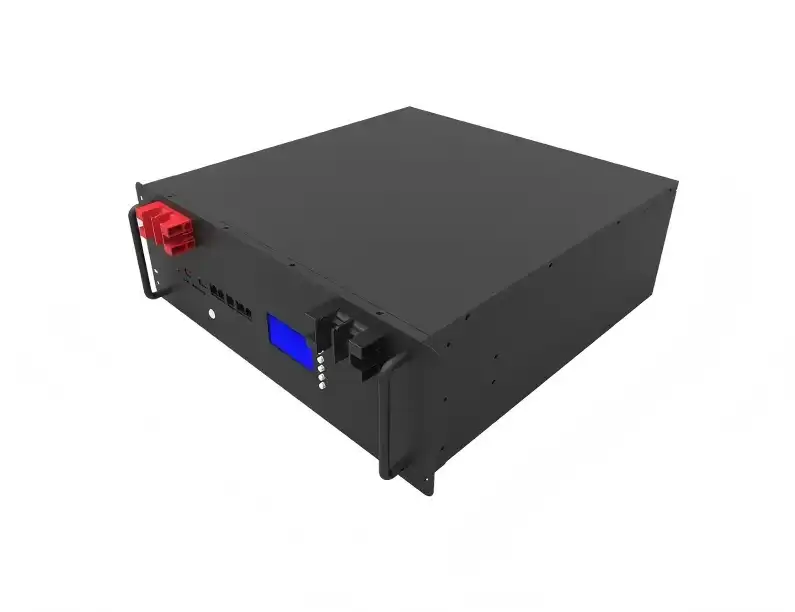
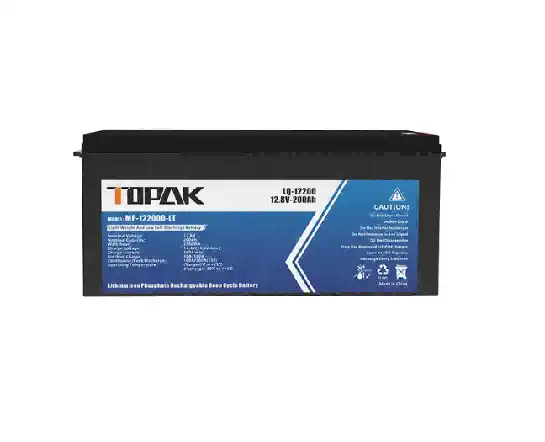
The 12.8V 200Ah LiFePO4 battery conveys 2,560Wh of energy capacity with a greatest persistent release rate of 200A, giving considerable depth of charge for basic foundation. These determinations translate to solid reinforcement control that can support server operations, cooling frameworks, and organizing hardware amid lattice blackouts or support periods.
The Advanced Battery Administration Frameworks coordinates into these units give comprehensive security against over-voltage, over-current, brief circuits, and temperature extremes. This multi-layered security approach guarantees operational security while maximizing battery life expectancy through brilliant charging calculations and cell adjusting features.
Energy Density and Thermal Stability Advantages
LiFePO4 chemistry offers prevalent energy density compared to conventional lead-acid batteries, conveying more usable capacity in a altogether littler impression. At roughly 23 kg with measurements of 522×240×218 mm, these batteries give four times the energy density of comparable lead-acid arrangements, whereas involving 60% less space.
The warm solidness of LiFePO4 innovation permits secure operation over wide temperature ranges without performance degradation. This characteristic demonstrates basic in information centers where surrounding temperatures can change due to cooling system cycling or gear warm-up.
Comparing 12V 200Ah LiFePO4 Batteries to Traditional Data Center Power Solutions
When choosing backup power options, data center managers have to make important choices, weighing the costs of the initial investment against the benefits of long-term operational efficiency. Lead-acid batteries have been the standard for decades, but 12V 200AH lithium iron phosphate battery technology has strong benefits that make it worth a close look.
Cycle Life and Total Cost of Ownership Analysis
Lead-acid batteries usually need 500 to 800 charges before they lose 80% of their power, but LiFePO4 batteries can handle 6,000 cycles or more in the same settings. The huge difference in cycle life means that the battery will cost a lot less to own over its entire useful life.
When looking at how often to replace something, lead-acid systems need to have their batteries changed every 3 to 5 years in a normal data center. LiFePO4 batteries can work well for 10 to 15 years, which cuts down on repair windows, labor costs, and the amount of work that goes into managing inventory. The longer service life also reduces the business downtime that comes with replacing batteries in important places.
Weight and Space Utilization Benefits
Because they are so heavy, traditional lead-acid battery banks need a lot of floor room and structural support. A similar lead-acid system weighs about 90–120 kg, while a 200Ah LiFePO4 battery only weighs 23 kg. This decrease in weight makes installation choices more flexible and lowers the amount of structural loading that data center buildings need to support.
When it comes to colocation facilities, where floor space is expensive, space optimization is especially useful. Because LiFePO4 batteries are small, data center managers can put as much revenue-generating equipment as possible in a space while still having enough backup power.
Environmental Impact and Safety Considerations
Heavy metals like lead and cadmium are not found in LiFePO4 batteries, which makes them a good choice for companies that want to be more environmentally friendly. The lack of acid electrolytes removes the risk of corrosion and makes handling easier for maintenance staff.
Safety certifications like UN38.3, MSDS, and CE compliance show that the product meets foreign standards for shipping, handling, and installation in business settings. These certifications give facility managers and insurance companies peace of mind about operating safety and following the rules.
Application Scenarios and Suitability of 12V 200Ah LiFePO4 Batteries in Data Centers
Data centers require diverse backup power configurations to address varying operational requirements and risk tolerance levels. LiFePO4 batteries excel in multiple application scenarios, providing flexibility for different deployment strategies.
UPS System Integration and Uninterrupted Power Supply
Uninterruptible Power Supply (UPS) frameworks speak to the essential application for backup batteries in data center situations. The tall release rate capability of 200A nonstop yield guarantees satisfactory control conveyance for servers, switches, and capacity frameworks amid lattice interferences. This release capacity bolsters both arranged upkeep exercises and crisis shutdown procedures.
Integration with the existing UPS framework demonstrates clear due to the 12.8V ostensible voltage compatibility with standard 12V battery arrangements. The drop-in substitution capability minimizes establishment complexity while giving prompt execution advancements in runtime and reliability.
Renewable Energy Storage and Demand Management
More and more, forward-thinking data center owners are using green energy sources to cut costs and meet environmental goals. LiFePO4 batteries make it easier to integrate solar panels because they can store extra energy during times of high production so that it can be used during times of high demand or low production.
Data centers can lower their peak power usage fees by using saved energy during times when utility prices are highest. This is possible with demand management. This load-shifting approach can cut monthly electricity costs by a large amount while also adding more backup power capacity.
Maintenance Strategies and Financial Advantages
12v 200ah lithium iron phosphate batteries don't need as much care as lead-acid batteries, which lowers costs and increases the time between service visits. Checking the electrolyte level, cleaning the terminals, and checking the specific gravity once a month are no longer needed. This frees up maintenance resources to do other important tasks.
In addition to lower upkeep costs, the financial benefits include better power quality, a longer lifespan for the UPS system, and lower cooling needs. These operational changes help lower the total cost of ownership while also making the facility more reliable as a whole.
Procurement Considerations: How to Source the Right 12V 200AH LiFePO4 Battery for Your Data Center?
Successful procurement of lithium iron phosphate batteries for data center applications requires careful evaluation of supplier capabilities, product specifications, and long-term support commitments. Understanding key procurement criteria enables informed decision-making that balances performance requirements with budget constraints.
Supplier Reputation and Certification Compliance
Built up producers with demonstrated track records in mechanical applications give more noteworthy confirmation of item quality and progress. Companies working since 2007 or prior illustrate stability and collected mastery in lithium battery innovation, improvement, and manufacturing processes.
Certification compliance gets to be basic for information center applications where security and reliability cannot be compromised. Basic certifications incorporate UL posting for electrical security, UN38.3 for transportation security, and important natural certifications for safe operations.
Product Compatibility and Technical Support
Battery compatibility with existing UPS frameworks requires cautious assessment of voltage characteristics, charging profiles, and communication conventions. Providers advertising comprehensive specialized bolster amid detail improvement and establishment stages decrease usage dangers and guarantee ideal performance.
Customization capabilities empower optimization for particular information center necessities, counting adjusted measurements, upgraded checking features, or specialized walled-in areas. Producers with in-house building groups can give custom-made arrangements that address one-of-a-kind operational challenges or space limitations.
Supply Chain Logistics and Bulk Order Strategies
Large-scale data center deployments work best with providers who have strong global distribution networks and a history of managing logistics. Manufacturers with foreign distribution channels can make sure that their products are always available and offer localized help in a number of different facility locations.
Strategies for bulk orders should take into account when deliveries will happen, how to keep track of inventory, and the need for staged rollout. Suppliers who offer flexible shipping terms and inventory management services can make buying things easier while still making sure there is enough stock to keep operations running.
TOPAK: Your Trusted Partner for Industrial-Grade LiFePO4 Battery Solutions
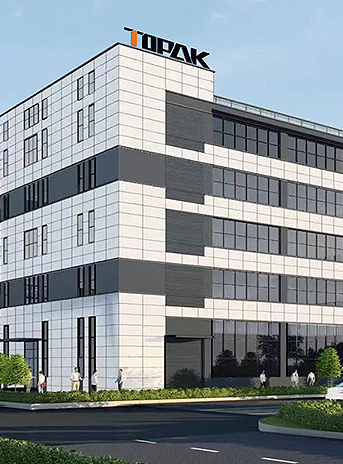
TOPAK New Energy Technology Co., Ltd. stands as a proven manufacturer of industrial-grade lithium battery solutions, established in 2007 with extensive expertise in customized energy storage applications. Our 25,000-square-foot㎡ manufacturing facility in Dalang TOPAK Industrial Park operates advanced automated production lines, ensuring consistent quality and rapid delivery for demanding data center applications.
Advanced Battery Management System Technology
Our in-house developed BMS technology provides superior safety and control compared to generic battery management solutions. The proprietary BMS design enables precise monitoring of cell voltages, temperatures, and current flow while implementing advanced protection algorithms tailored for critical infrastructure applications.
The integrated BMS features include over-voltage protection, over-current shutdown, short circuit detection, and thermal management, ensuring safe operation under all operating conditions. These protection systems work seamlessly with data center monitoring infrastructure to provide real-time status updates and predictive maintenance alerts.
Global Distribution and Technical Support
TOPAK maintains distribution partnerships across 15+ countries, providing localized support and rapid delivery for international data center operators. Our global presence enables consistent product availability and technical expertise regardless of facility location or deployment scale.
Comprehensive technical support services include pre-deployment consultation, system integration guidance, and ongoing maintenance support. Our engineering team collaborates with facility managers to optimize battery configurations for specific UPS systems and operational requirements.
Product Specifications and Customization Capabilities
With a capacity of 2,560Wh and the ability to discharge at 200A, our 12.8V 200Ah LiFePO4 battery performs exceptionally well. The small size (522 x 240 x 218 mm) and light weight (about 23 kg) make it easy to install in places with limited room.
Customization choices include changing the voltage configurations, increasing the capacity ratings, and making enclosures that meet specific environmental needs. We can use automation to make both standard configurations and custom designs, and our lead times and prices are reasonable.
Conclusion
The 12V 200Ah lithium iron phosphate battery represents an excellent choice for data center applications, offering superior performance, safety, and long-term value compared to traditional battery technologies. With 6,000+ cycle life, advanced BMS protection, and compact design, these batteries address the critical requirements of modern data center infrastructure while reducing the total cost of ownership. The combination of high energy density, thermal stability, and minimal maintenance requirements makes LiFePO4 technology an ideal solution for UPS systems, renewable energy integration, and backup power applications in mission-critical environments.
FAQ
How long does it take to charge a 12V 200Ah LiFePO4 battery?
Charging time for a 12.8V 200Ah LiFePO4 battery depends on the charger specifications and desired charge level. Using a standard 50A charger, the battery reaches 80% capacity in approximately 3.2 hours and full capacity in 4.5-5 hours. Fast charging capabilities allow higher current rates when compatible charging equipment is available, reducing charge times significantly compared to lead-acid alternatives.
What is the expected lifespan compared to lead-acid batteries?
LiFePO4 batteries provide 6,000+ cycles at 80% depth of discharge compared to 500-800 cycles for quality lead-acid batteries. In typical data center applications, this translates to 10-15 years of service life for LiFePO4 batteries versus 3-5 years for lead-acid systems. The extended lifespan reduces replacement frequency and associated maintenance costs while improving operational reliability.
Which safety certifications are required for data center deployment?
Essential safety certifications for data center deployment include UN38.3 for transportation safety, CE marking for European compliance, and MSDS documentation for safe handling procedures. Additional certifications may include UL listing for electrical safety and local fire safety approvals, depending on facility location and insurance requirements. TOPAK batteries meet all standard certification requirements for commercial deployment.
Partner with TOPAK for Your Data Center Battery Solutions
Transform your data center's backup power infrastructure with TOPAK's advanced 12v 200ah lithium iron phosphate battery solutions. Our industrial-grade batteries combine proven reliability with cutting-edge BMS technology, delivering the performance and safety standards your critical operations demand. As an established manufacturer with global distribution capabilities, TOPAK offers comprehensive technical support, customization options, and competitive pricing for bulk orders. Contact our team at B2B@topakpower.com to discuss your specific requirements and discover why leading data center operators choose TOPAK as their trusted battery supplier for mission-critical applications.
References
1. Battery University. "Lithium Iron Phosphate Battery Characteristics and Applications in Industrial Settings." Battery Research Institute, 2023.
2. International Data Corporation. "Data Center Power Infrastructure Trends and Battery Technology Assessment." IDC Energy Systems Report, 2023.
3. American Society of Heating, Refrigerating and Air-Conditioning Engineers. "Guidelines for Data Center Battery Room Design and Safety Standards." ASHRAE Technical Committee, 2022.
4. Institute of Electrical and Electronics Engineers. "Recommended Practices for Battery Management Systems in Critical Infrastructure Applications." IEEE Standards Association, 2023.
5. Green Grid Consortium. "Energy Storage Solutions for Data Center Sustainability and Operational Efficiency." The Green Grid White Paper Series, 2022.
6. Uptime Institute. "Battery Technology Evolution in Data Center UPS Systems: Performance and Reliability Analysis." Uptime Institute Research Division, 2023.

Tell us your battery specifications or application
TOPAK
Popular Blogs
-
 Product updateSuccessful caseProducts and services
Experience Consistent Power with a Low Speed EV LiFePO4 Battery
-
 Product updateSuccessful caseProducts and services
How Do Base Station Batteries Support Renewable Integration?
-
 Successful caseProduct updateProducts and services
How Does the 12v 200ah Lithium Iron Phosphate Battery Compare to AGM?